


Bringing plants into your home is one of the easiest ways to make a room feel alive, but keeping them healthy takes a little know-how. The good news is that most houseplants are far more forgiving than people think, and a handful of reliable indoor plant care tips will carry you through almost any problem. Whether you have just bought your first pothos or you are trying to rescue a fiddle leaf fig that has seen better days, the basics are the same: the right light, the right amount of water, and a pot that lets the roots breathe. This guide walks through each of those essentials in plain language, so you can stop guessing and start growing with confidence.
Light: The Foundation of Healthy Houseplants
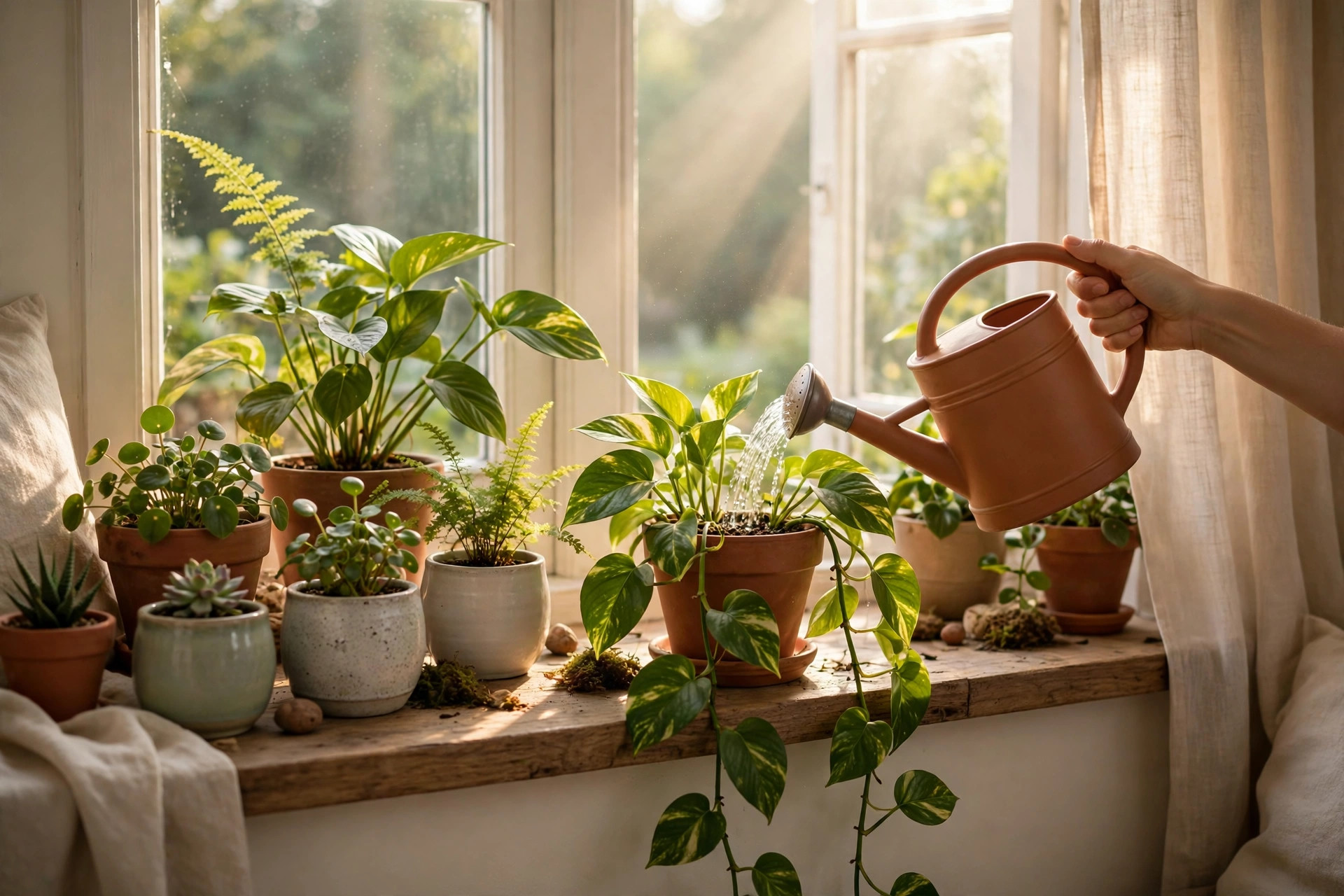
Light is the single most important factor in plant health, yet it is the one beginners most often get wrong. Most popular houseplants come from tropical forests, where they grow under a canopy and receive bright but filtered light. In your home, that usually means a spot near an east or south-facing window with a sheer curtain, or a few feet back from a bright window. If a plant is stretching toward the window with long, leggy stems and small leaves, it is asking for more light. If the leaves are scorched, pale or crispy at the edges, it may be getting too much direct sun.
Rotate your pots a quarter turn every week or two so all sides of the plant get their share of light and the plant grows evenly instead of leaning. In darker homes or during winter, a simple LED grow light on a timer can make the difference between a plant that merely survives and one that genuinely thrives. Our indoor plant guide for healthy houseplants goes deeper into matching specific plants to the light conditions in each room of your home.
Watering Without the Guesswork
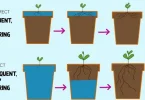
More houseplants die from overwatering than from any other cause. Roots need oxygen as well as moisture, and soil that stays soggy suffocates them and invites rot. The simplest of all indoor plant care tips is this: check before you water. Push your finger about two inches into the soil. If it feels dry at that depth, water thoroughly until it drains from the bottom of the pot, then empty the saucer so the plant is not sitting in water. If the soil still feels damp, wait a few more days and check again.
Signs Your Plant Is Thirsty (or Drowning)
- Drooping leaves that perk up after watering: the plant was simply thirsty.
- Yellow leaves and soft stems: usually a sign of too much water, not too little.
- Brown, crispy leaf edges: often low humidity or inconsistent watering.
- Fungus gnats hovering around the soil: the top layer is staying wet too long; let it dry out more between waterings.
Watering needs change with the seasons. Most plants grow actively in spring and summer and rest in autumn and winter, so expect to water less often in the cooler months. Grouping plants with similar needs together makes a routine much easier to keep.
Pots, Soil and Drainage
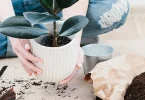
Every pot needs a drainage hole. Decorative pots without holes are fine as outer covers, but the plant itself should sit in a nursery pot or a pot with drainage so excess water can escape. Choose a pot only one or two inches wider than the root ball; a pot that is too large holds extra wet soil around small roots and encourages rot.
Soil matters too. A general-purpose potting mix works for most houseplants, but adding perlite or orchid bark improves drainage and airflow for plants that dislike wet feet. Cacti and succulents need a gritty, fast-draining mix of their own. When you are choosing new plants, our plant buying guide for healthy indoor and outdoor plants explains what to look for in the shop, from firm stems to pest-free leaves, so you start with a plant that is set up to succeed.
Feeding, Humidity and Everyday Care
Plants in pots cannot reach fresh nutrients the way garden plants can, so a gentle feed during the growing season keeps them looking their best. A balanced liquid fertiliser at half the strength on the label, applied once a month in spring and summer, is plenty for most houseplants. Skip feeding in winter when growth slows.
Many tropical plants also appreciate humidity above what a heated or air-conditioned room provides. Grouping plants together, placing pots on a tray of pebbles and water, or running a small humidifier nearby all help. Finally, make a habit of wiping dust from leaves with a soft, damp cloth every few weeks. Clean leaves photosynthesise better, look glossier, and give you a chance to spot pests early, when they are easy to deal with. You will find more seasonal advice in our Plant Care articles.
Common Beginner Mistakes to Avoid
Even with the best intentions, a few habits trip up nearly every new plant owner. The first is watering to a strict calendar. Plants do not drink to a schedule; a plant in a bright, warm room may need water twice as often as the same plant in a cool, shady one, so always check the soil rather than the date. The second mistake is moving a struggling plant from spot to spot every few days. Plants take time to adjust to new light levels, and constant moving adds stress just when the plant needs stability. Give any change at least two or three weeks before judging whether it helped.
Repotting too soon is another classic error. Most houseplants are perfectly happy being slightly snug in their pots, and moving them into much larger containers invites the overwatering problems described above. Only repot when roots are circling the bottom of the pot or pushing out of the drainage holes, and even then go just one size up. Finally, do not give up on a plant at the first yellow leaf. Older leaves naturally die back as new ones grow, and a single unhappy leaf is information, not failure. Snip it off, adjust one thing at a time, and watch how the plant responds.
A Simple Routine That Works
The secret behind every lush indoor jungle is not talent; it is a routine. Pick one day a week to walk around with a watering can, check the soil of each plant, turn the pots, and remove any dead leaves. Once a month, check whether anything needs feeding, a bigger pot, or a prune. Follow these indoor plant care tips consistently and you will be amazed how quickly nervous beginners turn into confident plant parents. Start with the plants you have, apply one improvement at a time, and enjoy watching your home grow greener week by week.


[…] herbs off the ground and close to the kitchen. If you already grow houseplants, the habits from our indoor plant care tips for beginners — checking soil moisture before watering and rotating pots for even light — transfer directly […]