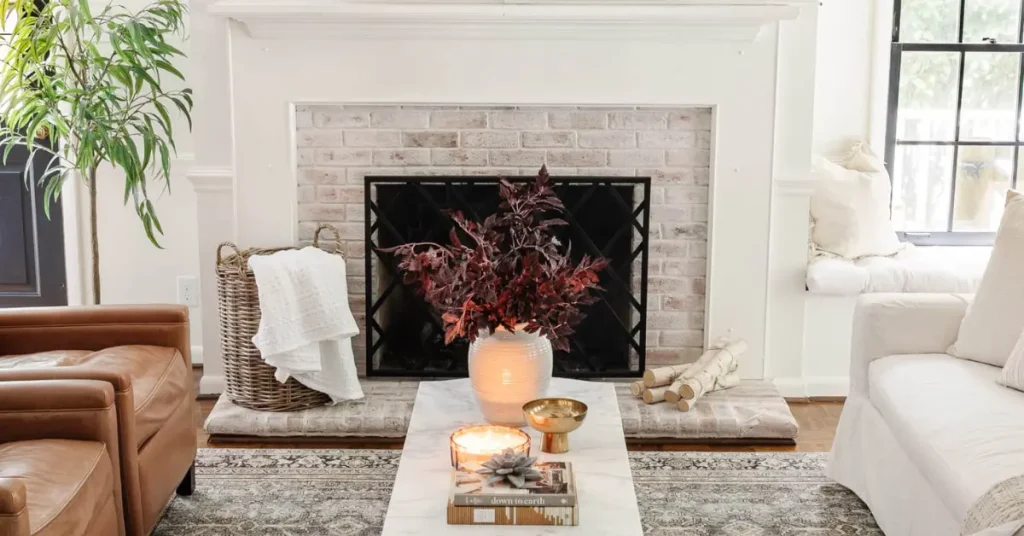
A small living room does not have to feel cramped, dark or cluttered. In fact, some of the most inviting living spaces are compact ones, because every piece in them has been chosen with care. The trick is not buying more storage boxes or copying a show home; it is understanding how light, scale and layout change how a room feels. These small living room ideas will help you make a modest room feel airy, comfortable and genuinely relaxing.
Let Colour and Light Do the Heavy Lifting
Light colours reflect daylight and push walls visually outward, which is why small living room ideas so often start with paint. You do not have to live in a white box: soft warm greys, pale sage, warm off-whites and light stone tones all open a room up while keeping it cosy. Paint the ceiling a shade lighter than the walls to lift it, and keep window treatments simple so daylight reaches as far into the room as possible.
Layer lighting instead of relying on one ceiling light. A floor lamp in a dark corner, a table lamp by the sofa and warm bulbs rather than harsh white ones remove the shadowy edges that make rooms shrink. A well-placed mirror opposite or beside a window doubles the effect by bouncing light and views around the room.
Choose Furniture at the Right Scale
Oversized furniture is the fastest way to overwhelm a small room, but tiny furniture is not the answer either — a room full of doll-sized pieces looks fussy and seats nobody comfortably. Aim for fewer, well-proportioned pieces: a full-size but slim-armed sofa, one good armchair and a compact coffee table beat a sprawling corner suite plus extras.
Furniture raised on legs creates visible floor space underneath, which the eye reads as more room. Glass or open-frame coffee tables, wall-mounted shelves instead of bookcases and a TV fixed to the wall all free up floor area. When shopping, the measuring discipline in our best outdoor furniture buying guide applies indoors just as well: check dimensions against your actual space, allow walking routes, and prioritise materials that will last.
Plan the Layout Around Movement
Push furniture against the walls and you often end up with a dead space in the middle and awkward edges. Instead, arrange seating so people can talk comfortably and walk through without sidestepping. A rug defines the seating zone and anchors the arrangement; choose one big enough for at least the front legs of the sofa and chairs to sit on, which ties the group together.
Keep pathways clear and sightlines long. If you can see from the door to the window without obstacles crossing your view, the room feels larger. Corners are valuable: a corner shelf, a plant stand or a reading chair with a lamp turns dead space into a feature. If you are planning a wider refresh, our living room decor ideas to refresh your space without a full redesign cover colour schemes and styling in more depth.
Build Storage Into Everything
Clutter shrinks a room faster than anything else, so every piece in a small living room should ideally do two jobs. An ottoman with storage inside holds blankets and doubles as a coffee table or extra seat. A sofa with drawers beneath, a media unit with closed cupboards for the mess and open shelves only for things worth displaying, baskets inside the fireplace if it is unused — all of these hide the everyday clutter that makes small rooms feel chaotic.
Vertical storage is the other half of the answer. Tall, narrow shelving uses wall height instead of floor space, and keeping shelves roughly two-thirds full leaves the breathing room that makes a display look calm rather than crammed.
Keep Decor Editing Ruthless but Warm
In a compact room, every object earns attention, so choose a few larger pieces over many small ones: one big piece of art over the sofa rather than a cluster of small frames, one statement plant in the corner instead of five small pots scattered about. Texture does the warming work that objects would otherwise do — a wool throw, linen cushions, a woven rug and a wooden side table add comfort without visual noise.
Plants deserve a special mention, because greenery draws the eye and softens hard edges. A tall plant in a corner adds height and life; if your thumb is not green yet, start with the forgiving varieties covered in our indoor plant guidance and build from there.
Rugs, Curtains and the Details That Stretch a Room
Soft furnishings can visually enlarge a room when they are chosen deliberately. A rug that is slightly too large for the seating area feels more generous than a small one floating in the middle of the floor, because your eye measures the room by its furnished footprint. Hang curtains as high and wide as the wall allows, with the fabric just clearing the floor; this draws the eye upward and makes windows — and the wall itself — seem taller and broader than they are.
Keep patterns calm. One patterned element, such as cushions or a single armchair, gives a small room character. Pattern on the rug, curtains, sofa and walls at once turns the space into visual noise. The same restraint applies to the mantelpiece and shelves: a few objects with space around them look intentional, while a crowd of ornaments makes even a large room feel smaller.
Mistakes That Make Small Rooms Feel Smaller
Some common habits work against you. Blocking part of a window with tall furniture cuts your best source of light. A dark feature wall behind the seating can close the room in, even if the other walls are pale. Buying a matching furniture set from one range often means every piece is bulky in the same way; mixing slimmer, varied pieces usually fits real rooms better. Finally, leaving the middle of the floor permanently occupied by toys, exercise equipment or laundry racks trains everyone to see the room as storage. A ten-minute reset each evening — everything back to its home — is the cheapest of all small living room ideas and the one visitors notice most.
Conclusion
The most successful small living room ideas are about editing, not spending. Lighten the colours, scale the furniture honestly, arrange for easy movement, hide storage in plain sight and let a few well-chosen pieces carry the room. Do those things and a compact living room stops feeling like a compromise — it becomes the calm, welcoming heart of the home that it should be.